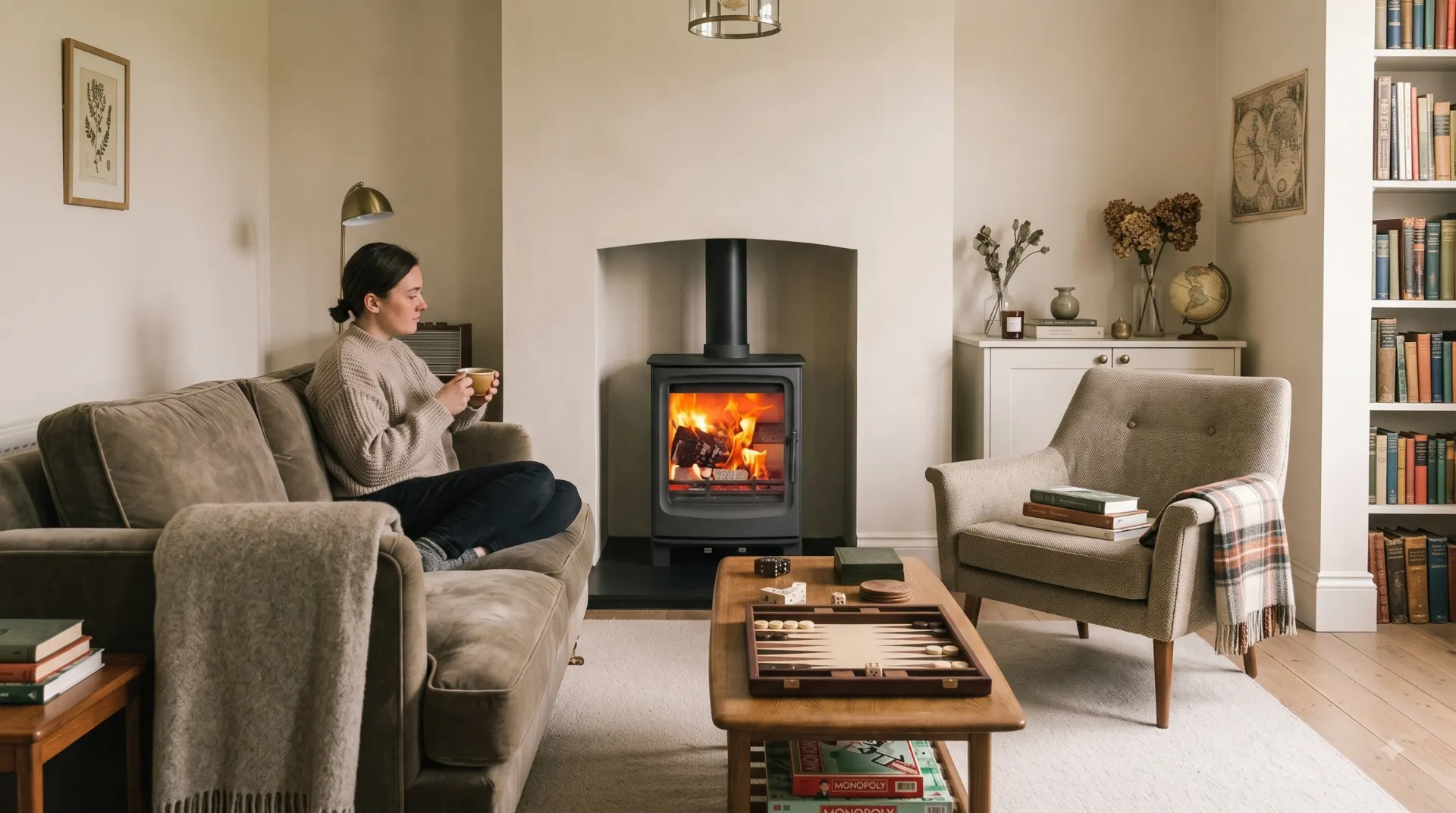
Photographs from recent jobs across Tyne and Wear, Durham and Northumberland.
Most people look at the stove. These are the four things worth looking at in the photographs above, because they are what separates a good installation from a cheap one.
Not an appliance swap. The chamber, the flue and the finish were all part of the job.
Every installation on this page started with a free survey, in person or remotely from photographs, and a fixed price in writing before anything was booked in. Most were completed inside a single day.
In each case we carried out the building works to open the chamber up, fitted the flue system the property needed, installed the hearth, chamber, beam and appliance, then commissioned and tested it before issuing the certificate.
If something here looks close to what you are after, the packages page shows what each one includes and what it costs. If your property is unusual, or you are not sure whether it has a serviceable chimney, the survey will tell you before you spend anything.
Further jobs from across Tyne and Wear, Durham and Northumberland.
Based in Hebburn, working across Tyne and Wear, Durham and Northumberland.
How to judge a stove installation, and the details we care about on every job.

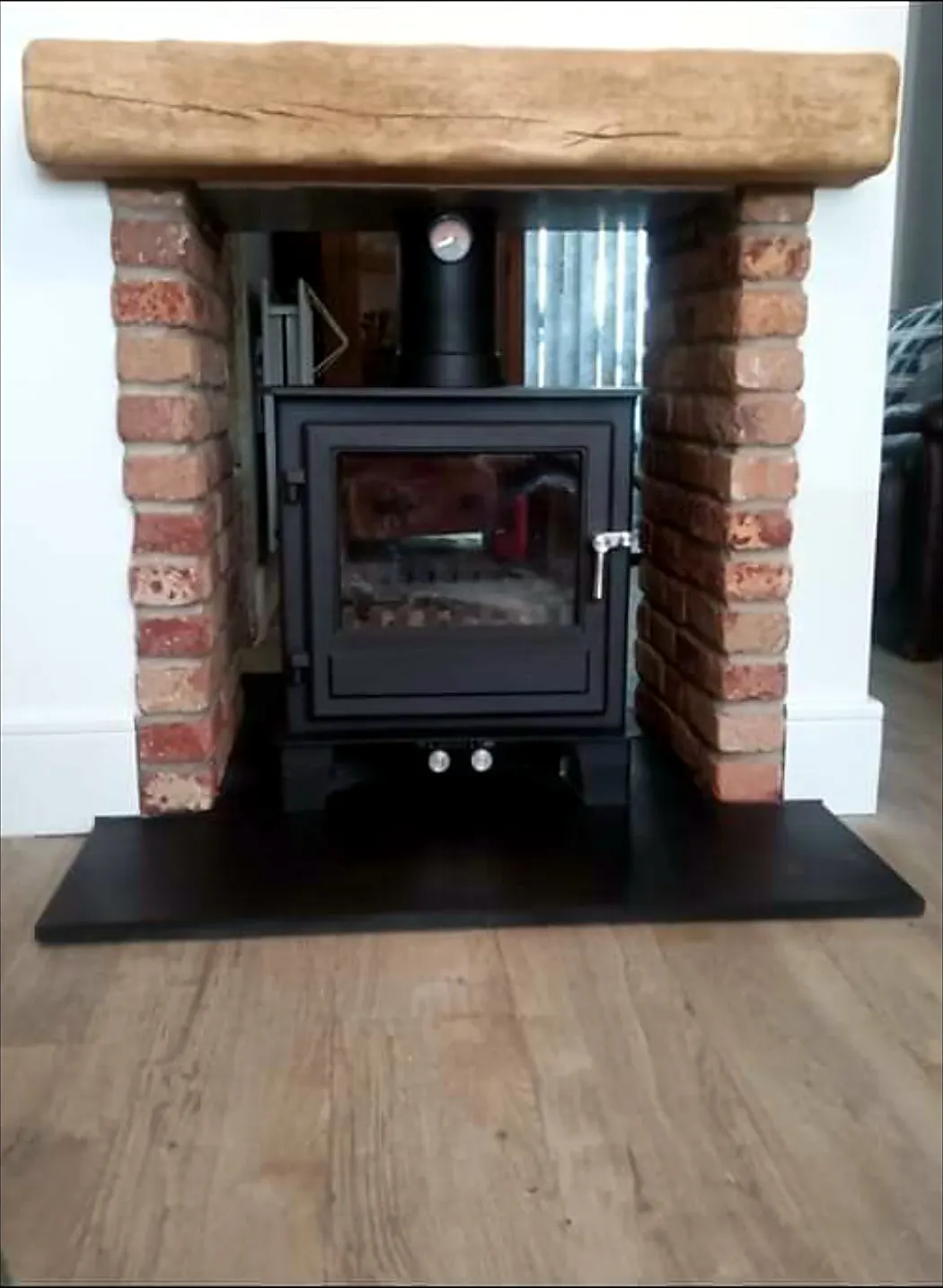
The first thing to look at in our work is the chamber behind the stove. A well formed chamber is square, sized to the stove with even margins, and finished cleanly where it meets the plaster. Plain chambers are left ready for you to finish, while tiled and brick slip chambers are completed on the day with nothing left to decorate.
Every stove in our work stands on a non-combustible hearth cut to the size Building Regulations require for that appliance. Sandstone is standard and riven slate is an upgrade. Look at how the hearth sits against the chamber and the floor: tight joints and a level surface are what you want.
A light or dark oak beam above the opening frames the stove. In our work the beam is fitted level, at a safe distance from the stove and the flue, and sized to the opening rather than whatever was in stock.
Where the stove pipe is visible, it should rise straight and clean into the closure plate. A neat flue pipe is a small detail, but it is often what separates a professional installation from an amateur one.
The most important parts of our work are hidden: the liner sized to the stove, the closure plate sealing the old chimney, the cowl on top of the stack, the lintel above the opening and the ventilation. They decide whether the stove draws well for the next twenty years, and they are why every job is commissioned, tested and certified before we leave.
Plain, tiled, brick slip, and the original brick or stone where it is worth keeping.
A clean background, patch plastered around, ready for you to brick, render or paint. Some of our work is finished this way because the customer has a decorator lined up or wants to choose the finish later.
Our most popular finish. Andalusia tiles have warm, weathered timber tones that sit well with light oak. Lucena tiles mix slate and rust tones with more contrast, and hold their own against a dark beam. Much of our work in terraced front rooms uses one of the two.
A reclaimed style brick slip finish, our most complete option. It suits period rooms and larger chimney breasts, and it is the finish people most often choose once they have seen it in the showroom.
In older stone cottages and some Victorian houses, the best finish is the one already there. Where the original brick or stone is sound, part of our work is opening it up carefully and leaving it exposed.
All of these finishes are on display in the Hebburn showroom, so you can see them at full size before you decide. Read more about the finishes in our stove packages.
The kinds of homes we work in most, and what each usually involves.
A large share of our work is in terraced houses across Hebburn, Jarrow, Gateshead, South Shields and Sunderland, where the original chimney breast is lined and opened up for a modern stove.
In Newcastle, Tynemouth and Low Fell, much of our work is in Victorian and Edwardian houses, where we keep original surrounds wherever we can and fit the stove within them.
In Washington, Killingworth and newer estates across the region, our work usually means a twin wall insulated flue, designed around the house. See our page on flue and chimney systems.
Further out in Durham and Northumberland, our work includes stone cottages, farmhouses and barn conversions, where a stove is often the main source of heat.
Wherever the job, the standard is the same, and every installation is carried out by our own HETAS registered engineers. You can check our registration on the HETAS register.
The same steps on every job, by the same team.
Every job in our work starts with a free survey, in person or from photos. We check the chimney or flue route, the hearth area, the floor, the ventilation and the room, and agree what you want it to look like.
You get a fixed price in writing covering everything, with any extras listed. Nothing is added on the day.
The chimney breast is opened up to a suitable size, a lintel fitted where needed and the opening patch plastered. This is the part of our work that decides how the finished fireplace looks.
The liner goes down the stack with a closure plate at the bottom and a cowl at the top, or a twin wall flue is built where there is no chimney.
The hearth is laid, the chamber finished, the stove positioned and connected, and the beam fitted above the opening.
The flue is smoke tested, the stove lit and the draw checked, the carbon monoxide alarm fitted and tested, and the notice plate fixed. You are shown how to run the stove, and the HETAS certificate is issued. Only then is our work finished.
The rules every installation is built to.
All of our work is notifiable building work under Building Regulations, mainly Part J. Because our engineers are HETAS registered, we self-certify each installation and notify the council, so you have no separate application to make. The approved documents set out the rules we work to.
Every stove in our work is Ecodesign Ready and suitable for smoke control areas, which cover much of Tyne and Wear. The GOV.UK smoke control rules explain what you can burn.
Every stove is installed to its manufacturer's installation manual, including flue size, clearances and hearth dimensions. That protects the warranty as well as the performance.
Which combinations suit which rooms, based on the jobs we do most.
In a compact terraced front room, a neat tiled chamber with a sandstone hearth and light oak beam keeps things bright and in proportion. Looking through our work, it is the combination we fit most often in Hebburn and Jarrow terraces.
Tall rooms can take a bolder fireplace. A brick slip chamber with a dark oak beam, or an original surround kept around the stove, suits the scale. Where the original surround survives, keeping it is usually the best decision.
A freestanding stove on a slate hearth, with a short run of black flue pipe on a twin wall system, works well in a modern room or an open plan space. The squarer stove designs suit it best.
Where the stone or old brick is sound, leaving it exposed gives a finish that cannot be bought. In our work in older cottages, that is what most people choose once they see it opened up.
As a rule of thumb, sandstone pairs with light oak and Andalusia tiles, while riven slate pairs with dark oak and Lucena tiles. It is not a rule you have to follow, but it is a reliable starting point.
The easiest way to be sure is to see the hearth, tiles and beam side by side in the showroom, ideally with a photo of your room on your phone, because colours look quite different under your own lighting at home in the evening.
Not every job is a brand new fireplace.
A good share of our work is replacing old stoves that are past their best or have been condemned. We remove the old appliance, check the flue, replace the liner if it is worn or the wrong size, and fit a new stove to current regulations.
We can usually fit a stove you have bought elsewhere, as long as it is a current appliance with its paperwork and it suits the room. We check it at the survey first, and if it is the wrong size for the room, we will tell you before you spend anything on installation.
Some of our work is fixing stoves that smoke, draw poorly or were fitted without a certificate. Most of the time it is the flue, not the stove, and a correctly sized liner and the right cowl solve it.
It is worth ruling the flue out before buying a new appliance, because a new stove on the same faulty flue will usually behave exactly like the old one did.
Whatever the job, book a free survey and we will tell you honestly what is needed, with a fixed price in writing.
Four things a gallery cannot show you.
A photo cannot show you whether a stove lights easily, burns cleanly and keeps the glass clear. Those come from a correctly sized liner, a suitable cowl and enough air into the room, and they are the parts of our work we test before we leave.
We smoke test the flue, light the stove, check the draw with the door open and closed, and make sure the room has the air it needs. If anything is not right, it is put right there and then, not left for you to discover on the first cold evening.
Turning up when we said we would, keeping you informed, sheeting the room and leaving it tidy. Reviews mention these far more than the stove itself, and they are as much a part of our work as the fireplace in the photo.
Every installation in our work is commissioned, certified and notified under Building Regulations. The certificate does not appear in any photo, but your insurer and any future buyer will ask for it.
If anything needs looking at, the same engineers who did the job come back. That continuity is easy to overlook when choosing an installer from photos alone, and it is one of the main reasons most of our work comes from recommendations. Read what customers say on our reviews page.
What people ask after looking through the gallery.
The Hebburn showroom has stoves, hearths, chambers and beams on display, so you can see the finishes at full size. No appointment is needed in opening hours.
Yes. If something in the gallery catches your eye, screenshot it and bring it to the showroom or send it with your survey photos. It is the quickest way to show us the look you are after.
Very likely. We work across Tyne and Wear, Sunderland, Washington, County Durham and Northumberland. See the areas we cover for local detail.
Most of our work is completed in a single day, occasionally two where the chimney needs more opening up than expected.
A stove, hearth, beam and liner fitted into an opening that is already the right size starts at £2,199 fully installed. Jobs with building works and a finished chamber are covered by our fixed price packages. Every price is confirmed in writing after a free survey.
Keep the first few fires small while the paint cures, burn wood under 20% moisture and have the chimney swept at least once a year. If anything about our work ever needs attention, the same team that fitted it comes back.
Tell us a little about the room and the chimney and we will give you a fixed price in
writing.
We can survey in person, or remotely from photos and Google Maps.
No charge and
no obligation.
