Flue installation and chimney systems across the North East
Flue installation designed around your stove and your house. The flue is what makes a stove work. We design and install the whole system, whether that
is a liner down an existing chimney or a twin wall route through a house that has never
had one, and we test it before we sign it off.
Most stove problems we get called out to are flue problems rather than appliance problems. Which system you need depends on whether there is a serviceable chimney, and the free survey tells you which before you spend anything.
01
Flexible flue liners
For a property with an existing chimney. An old masonry stack was built for an open fire, so it is usually far too wide and too cold for a modern stove, which is what causes poor draw and tar. A liner gives the appliance the correct diameter and keeps the gases warm all the way to the top.
We supply and install both 316 and 904 grade
stainless liners. 904 stands up better to the acids from smokeless fuels, so which one
suits you depends on what you intend to burn.
316 and 904 grade stainless
Correct diameter for the appliance
Closure plate, pot and cowl
02
Twin wall insulated systems
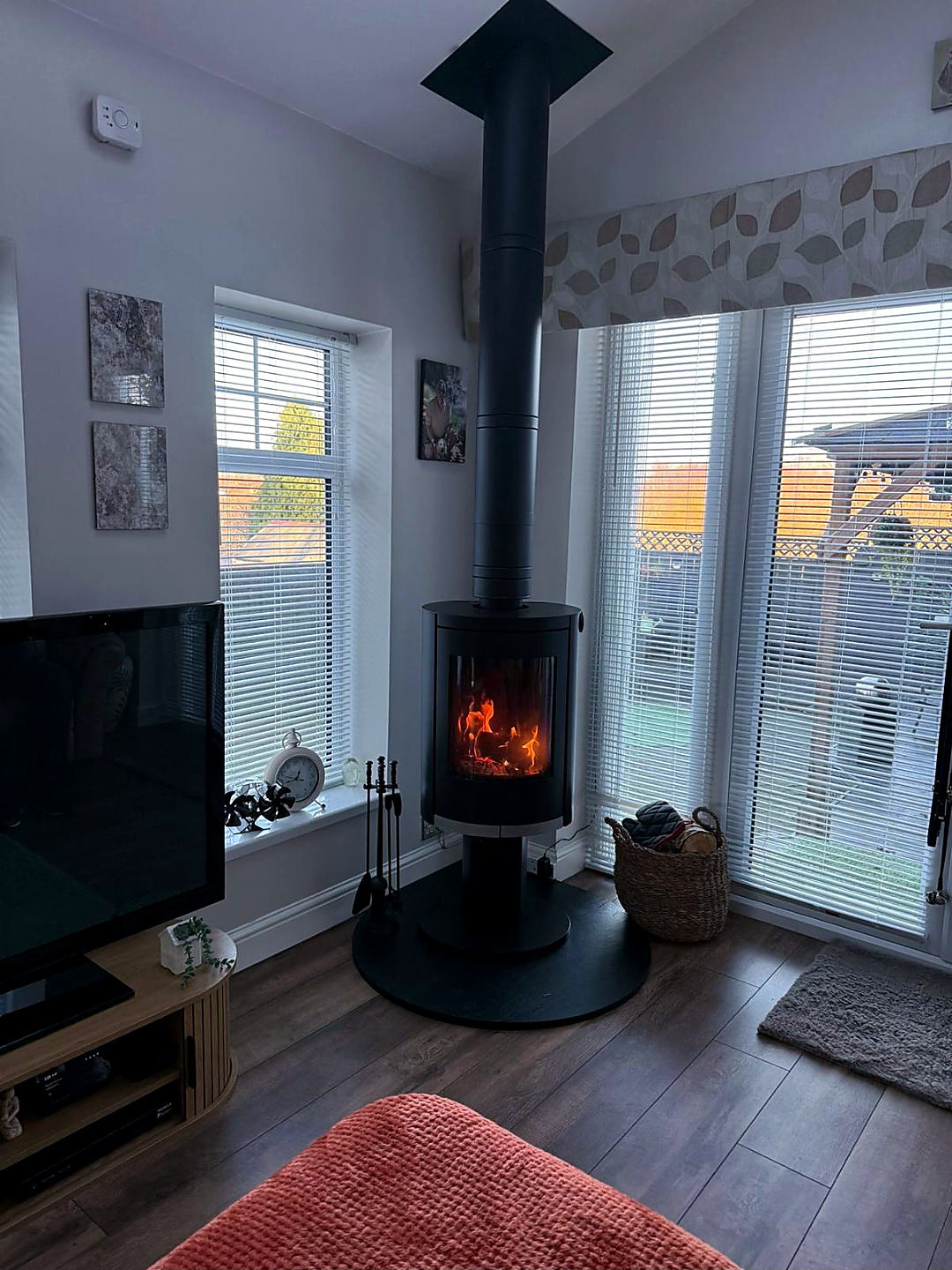
For a property with no chimney at all, or one that cannot be lined. A twin wall system builds a flue where there was not one, running from the appliance up through the ceilings and out through the roof, or up an external wall.
The route is designed around the layout of the
house rather than forced through it, which matters for both how it performs and how it
looks. Common on extensions, garden rooms and newer properties.
If any of these sound familiar, the flue is worth looking at before you spend money on a new appliance.
Smoke in the roomThe most obvious sign, and almost always a draw problem rather than a stove problem.
Cold downdraftCold air coming down the chimney when the stove is not lit points to an unlined or oversized flue.
A deteriorated linerLiners do not last forever. An old one can crack or corrode, particularly if smokeless fuel has been burned on a 316.
Tar and stainingTar build up or staining on the chimney breast means the flue gases are cooling too much on the way up.
A new applianceA different stove often needs a different flue size, so an existing system may not simply carry over.
Designed and installed by us
We do not fit an appliance and leave the flue to somebody else. The same HETAS
registered team designs the route, supplies the components, installs it, tests it and
issues the paperwork.
The things people ask us most often about lining a chimney or fitting a new flue.
Does my chimney need lining?
In most cases yes. An old masonry chimney was built for an open fire, so it is usually too large and too cold for a modern stove, which causes poor draw and tar build up. A liner gives the stove the correct diameter and keeps the flue gases warm.
What if my house has no chimney at all?
We install a twin wall insulated flue system instead. It runs from the stove up through the ceilings and out through the roof, or up an external wall, and is designed around the layout of the property rather than forced through it.
What is the difference between 316 and 904 liner?
Both are stainless steel. 904 grade has a higher nickel and chromium content, so it stands up better to the acids produced when burning smokeless fuels. If you burn only well seasoned wood, 316 is usually enough. We advise on which suits your fuel at the survey.
Why is my stove smoking or drawing badly?
Usually the flue rather than the appliance. Common causes are an unlined or oversized chimney, a liner that has deteriorated, a blocked or missing cowl, or not enough ventilation in the room. A survey will identify which it is before you replace anything.
Does the flue need ventilation as well?
Stoves above 5kW need a permanent air supply to the room, and many modern airtight homes benefit from one at any output. We fit ventilation and direct air kits as part of the installation where they are needed.
How much does flue installation cost?
On a typical job with a serviceable chimney, the liner, closure plate and cowl are included in our stove price, from £2,199 fully installed. Twin wall systems for homes with no chimney are priced individually after a free survey, because the route and height decide the cost.
Flue installation, explained
How flue installation works, what decides the size and route, and what it costs.
What flue installation involves
Flue installation is the part of a stove job that decides whether the stove draws well for the next twenty years. Where there is a chimney, it means dropping a flexible stainless steel liner from the top of the stack to the stove, sealing it at the bottom with a closure plate, and fitting a cowl at the top. Where there is no chimney, it means building one: a twin wall insulated system routed through the house or up an outside wall.
Either way, the work is designed around the stove. The liner diameter, the height of the flue and the type of cowl all depend on the appliance and the property, which is why every flue installation we carry out starts with a survey rather than a standard kit.
Why liner diameter matters
An old masonry flue built for an open coal fire is far too wide for a modern stove. The gases spread out, cool and slow down, so the stove draws badly and tar condenses on the way up. A liner sized to the stove keeps the gases hot and moving.
Many Ecodesign stoves approved for smoke control areas can run on a 5 inch liner, while others need 6 inch. The stove's installation manual decides, and we follow it. Fitting the wrong size to save money is the most common shortcut we find when called to put right somebody else's flue installation.
Insulating the liner
On a cold external stack, or a tall one, insulation around the liner helps the flue warm up quickly and stay warm. That improves draw on lighting and reduces condensation. Whether it is needed depends on the stack, and we tell you at the survey.
Twin wall flue installation: inside or outside?
An internal route runs up through the ceilings, usually through a bedroom or cupboard above, where it is boxed in to the correct clearances, and out through the roof. It stays warmer, so it draws well, and it is less visible from outside.
An external route goes out through the wall behind the stove and up the outside of the house. It avoids work in the rooms above but is more visible. On each twin wall flue installation we weigh both options against your layout and show you where each would run before you decide.
Outlet height and position
Building Regulations set minimum heights and distances for the flue outlet in relation to the roof, nearby windows and neighbouring buildings, so that smoke disperses properly and does not come back into your house or next door. The approved documents set the detail. Getting the outlet position right is part of every flue installation we design, particularly on bungalows and extensions where the roof is low.
What flue installation costs
On a typical job with a serviceable chimney, the liner, closure plate and cowl are included in our stove price, from £2,199 fully installed where the chamber is already the right size, and in every stove package. Twin wall systems are priced individually after the survey, because the route and height decide the cost. Every price is fixed in writing before anything is booked.
Flue installation: cowls, upkeep and different homes
The details that keep a flue working, and how the job changes from one type of property to another.
Choosing the right cowl
A cowl sits on top of the flue to keep rain and birds out and, where needed, to help the draw. A standard pot hanging cowl suits most sheltered stacks. Exposed stacks on the coast or on high ground may need an anti-downdraught cowl. Choosing the right one is a small part of flue installation with a big effect on how the stove behaves on windy days.
Liners need sweeping too
A lined flue still needs sweeping, at least once a year, and more often for wood in regular use. Soot and tar build up inside the liner just as they do in a masonry chimney. The National Association of Chimney Sweeps lists qualified sweeps, and your insurer may ask to see a sweep certificate.
How long does a liner last?
It depends on the grade and what you burn. A good liner on dry, seasoned wood lasts many years. Burning smokeless fuel on a 316 grade liner shortens its life, because of the acids produced, which is why we recommend 904 grade if you plan to burn smokeless fuel. Wet wood shortens any liner's life.
When a flue installation needs replacing
Signs include smoke into the room, cold downdraught when the stove is not lit, tar staining on the chimney breast, or a liner that has visibly corroded at the bottom. A new stove often needs a different diameter too, so the existing flue may not simply carry over. We check it at the survey and tell you honestly whether it can stay.
Flue installation in different kinds of property
Terraced houses often share a stack with next door, so we survey the whole stack, not just your flue. Single-storey cottages and bungalows can have short flues, which may need extending to draw well. In Tyneside flats the flue from the downstairs flat passes through the home above, which needs your neighbour's agreement. Garden rooms and extensions usually need a twin wall system with careful attention to distances from boundaries and combustible materials.
Whatever the property, the same HETAS registered team designs, installs and tests the flue, and you can check our registration on the HETAS register. Book a free survey and we will tell you exactly which flue installation your property needs, with a fixed price in writing.
Flue installation day, step by step
What happens on the roof, in the loft and in the room on the day your flue is installed.
Lining an existing chimney
On a lining job the work starts on the roof. The old pot is checked or replaced, the liner is fed down the stack from the top, and the bottom is connected to the stove through the closure plate. Where the stack is cold or tall, insulation goes around the liner. Then the cowl is fitted and the top is sealed against the weather.
Inside, the chamber is formed and the register or closure plate is fitted just above the stove, so the liner is sealed and the old chimney void is closed off. That plate stops warm air escaping up the old flue around the liner, and it gives the sweep access in future. On most terraced houses the whole lining flue installation takes a morning, leaving the afternoon for the hearth, the stove and commissioning.
Building a twin wall flue
On a twin wall flue installation the sections are assembled from the stove upwards. Each joint locks together, supports are fixed at set intervals, and where the flue passes through a ceiling, floor or roof, a fire stop and the correct clearances to combustible materials are maintained. On the roof, a flashing seals the flue to the tiles or slates, and a storm collar and terminal finish it off. Inside the house, the boxing around an internal twin wall flue is built to keep the required clearance, and can be plastered and painted to match the room.
Testing before sign off
No flue installation is finished until it has been tested. We smoke test the flue to check for leaks, light the stove and check the draw, and confirm the carbon monoxide alarm works. Only then do we issue the HETAS certificate and notify the council. Keep that certificate safe, because it records exactly what flue installation was carried out, and your insurer, your sweep and any future buyer may all ask to see it. Store it with the stove manual.
Ventilation
A stove needs air to burn, and the flue can only draw if that air is replaced. Above five kilowatts a permanent air vent is required by Building Regulations, and in very airtight modern houses one can be needed below that. Some stoves can take their combustion air from outside through a direct air kit, which suits airtight homes. We check this as part of every flue installation and include any vent in the written price.
Who does the work
We do not fit an appliance and leave the flue to somebody else, and we do not subcontract the roof work. The same HETAS registered team that surveys the property designs the route, supplies the components, carries out the flue installation, tests it and issues the paperwork. If anything needs attention later, it is the same team that comes back.
Book a free survey, in person or from photos of the chimney breast and the outside of the stack. We will tell you which flue installation your property needs, and give you a fixed price in writing with no obligation.
Not sure what your chimney needs?
Tell us a little about the property and we will tell you honestly whether it needs
lining, a twin wall system, or just a cowl and a sweep. We can survey in person, or
remotely from photos and Google Maps. No charge and no obligation.